Overview: This blog explains how CPR training supports OSHA workplace safety goals by improving employee response during emergencies. It covers real workplace situations like collapse, choking, and cardiac arrest. It also shows how CPR certification Fort Worth programs help employees act quickly and confidently. The focus is on building safer workplaces through practical training, awareness, and faster emergency response.
The best time to learn CPR is before someone needs it…
Workplace safety is a key part of OSHA standards, but real safety is not only about rules, inspections, or warning signs. It also depends on how employees respond when something unexpected happens. A normal workday can change in seconds when someone collapses, chokes, or suddenly feels unwell at work.
In those moments, there is no time for delay or confusion. Coworkers nearby often become the first responders, and their actions in those first few minutes matter most. CPR training helps employees respond with clarity and confidence. Many workplaces include training programs like CPR certification Fort Worth or similar to stay prepared.
OSHA Workplace Safety Goals in Real Work Environments
OSHA focuses on creating safer workplaces by reducing injuries, preventing risks, and improving emergency response. While many safety measures aim to prevent accidents, OSHA also recognizes that emergencies can still happen even in well-managed environments.
Because of this, preparedness becomes just as important as prevention.
In simple terms, OSHA safety goals encourage workplaces to:
- Reduce the risk of injuries
- Ensure quick and effective emergency response
- Improve employee readiness during critical situations
Medical emergencies such as cardiac arrest or choking can occur without warning. When they do, the speed of response often becomes the most important factor. CPR training supports these goals by helping employees respond immediately instead of hesitating.
Why CPR Training Matters When Emergencies Happen
In real workplace emergencies, confusion is common. Even when people want to help, they may not be sure what step to take first. Some may wait for others to act. Others may panic or feel uncertain.
CPR training helps reduce this uncertainty by giving employees a clear and simple response process.
A trained employee knows how to:
- Check if a person is responsive
- Call emergency services without delay
- Start chest compressions if needed
- Use an AED when available
- Continue care until help arrives
These steps are straightforward, but in a stressful moment, having practiced them before makes a major difference.
Employees who complete CPR certification Fort Worth training are more likely to respond quickly because they have already seen and practiced these steps in a controlled environment.
The Importance of Time During Medical Emergencies
Time plays a critical role in emergency situations. In cases like cardiac arrest, blood flow stops immediately. Without CPR, brain damage can begin within minutes. Emergency medical services do their best to arrive quickly, but there is always a gap between the incident and professional help. That gap is where CPR-trained employees become important.
Even basic CPR helps maintain blood circulation until help arrives. This simple action can improve survival chances and reduce the severity of the situation. OSHA safety goals strongly support this type of early response because it improves overall workplace outcomes.
Why Hands-On Practice Is Essential
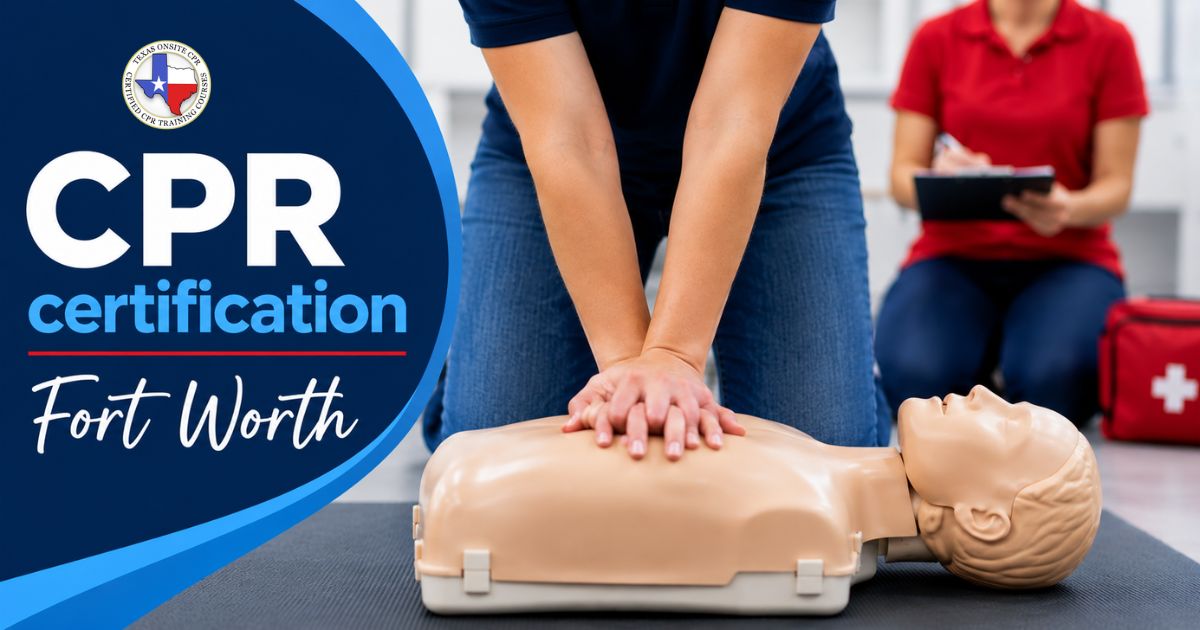
CPR is not a skill that can be fully learned by reading or watching. It requires physical practice to build confidence and accuracy.
Hands-on training allows employees to:
- Practice correct chest compression technique
- Learn how to operate an AED step by step
- Understand how to respond under pressure
- Build muscle memory for real situations
When employees practice these actions, they are more likely to respond effectively when an emergency actually occurs.
Texas OnSite CPR offers onsite training programs that allow employees to practice in their own workplace environment. This makes the learning more realistic and easier to apply later.
Building a Stronger Workplace Safety Culture
Workplace safety is not only about rules or equipment. It also depends on how aware and prepared employees are. When CPR training is included in workplace development, it helps build a stronger safety culture. Employees become more alert, responsible, and ready to respond during emergencies.
This leads to better understanding of warning signs, improved communication, and more confidence among staff. It also helps create faster and more organized responses in critical situations. Over time, safety becomes a normal part of daily work behavior, and employees naturally think and act in a more prepared way.
Making CPR Training Accessible for Businesses
For many organizations, ease of access plays a big role in training decisions. Searching for “CPR certification near me” helps employers find local options that reduce travel time and simplify scheduling.
Onsite training adds even more convenience by bringing instructors directly to the workplace.
This approach allows:
- Group training sessions in one location
- Flexible scheduling for teams
- Less disruption to daily work
- Training in a familiar environment
Texas OnSite CPR focuses on onsite programs that help businesses train employees efficiently while keeping the learning practical and relevant.
How CPR Training Supports OSHA Compliance
OSHA encourages workplaces to be prepared for emergencies, especially in environments where health risks exist. While CPR certification is not mandatory for all employees, having trained staff supports compliance goals.
CPR training helps by:
- Improving emergency readiness
- Reducing response time during incidents
- Strengthening safety programs
- Supporting emergency action plans
A written safety plan is important, but it only becomes effective when employees know how to carry it out during real situations.
Real Workplace Value of CPR Training
The true value of CPR training becomes clear during real incidents. In an office, it may mean someone starting CPR before help arrives. In a warehouse, it may involve responding to a choking incident. In retail or industrial settings, it may involve stabilizing a person until emergency services take over.
These actions do not replace medical professionals. Instead, they provide critical support during the early minutes when time is limited. That early response can significantly influence outcomes.
Long-Term Benefits for Employers and Employees
CPR training offers long-term benefits that go beyond immediate emergencies.
For employers, it supports:
- Safer work environments
- Better preparedness for emergencies
- Stronger safety compliance
- Reduced workplace risk
For employees, it provides:
- Confidence during emergencies
- Practical life-saving skills
- Better awareness of safety situations
- Ability to support coworkers effectively
These combined benefits strengthen overall workplace readiness.
Get in Touch for CPR Training Today!
OSHA workplace safety goals focus on readiness, but real readiness comes from practice and awareness. Emergencies such as choking, collapse, or cardiac arrest can happen without warning, and response time becomes critical. Training helps employees move from uncertainty to action.
Texas OnSite CPR delivers hands-on instruction that focuses on real workplace needs rather than classroom theory alone. Employees learn through practical scenarios that improve confidence and coordination. With reliable CPR certification Fort Worth or nearby, organizations build stronger teams that are capable of responding effectively when urgent situations arise.
FAQs
Q1:What is the purpose of CPR training in OSHA workplace safety?
CPR training helps employees respond quickly during medical emergencies, supporting OSHA goals by reducing response time and improving survival chances in critical situations.
Q2:Who should take CPR training at work?
All employees can benefit from CPR training, especially those in offices, warehouses, construction sites, healthcare, and roles involving public interaction or safety responsibilities.
Q3:How often should CPR certification be renewed?
CPR certification is typically renewed every two years to ensure employees stay updated with current techniques and maintain emergency response readiness.
Q4:Does CPR training include hands-on practice?
Yes, CPR training includes hands-on practice such as chest compressions, AED use, and real-life scenarios to build confidence and improve skill accuracy.
Q5:Who provides CPR training for workplaces?
Professional trainers like Texas OnSite CPR offer onsite CPR programs that bring training directly to workplaces for greater convenience and practical, real-world learning experiences.


BLS Provider CPR Classes for Individuals at our 3 Locations

George Brown
All of our staff are now trained in CPR. We now have the highest safety standards in our industry in Texas.
~ G-tech Industrial
Texas OnSite CPR
Text or Call: 817-992-0585
Email: info@texasonsitecpr.com
Contact Us Texas OnSite CPR © 2026.Nancy Stetson
To have our training onSite made it so much easier to get all of our employees trained in CPR.
~ Buffalo Ranch