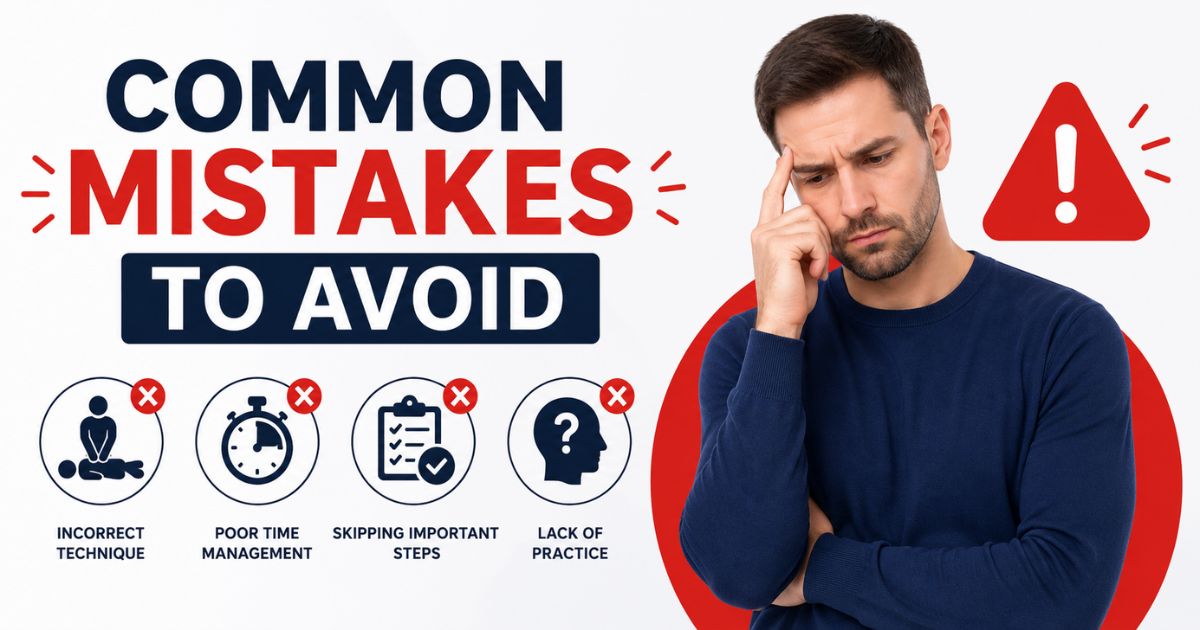
Overview: This blog explains common mistakes healthcare providers make before BLS renewal classes and how to avoid them. It covers preparation gaps like last-minute booking, poor skill review, and lack of practice. It also highlights how proper planning improves confidence and performance during training. The goal is to help learners stay prepared and complete their BLS renewal smoothly and effectively.
More than 350,000 out-of-hospital cardiac arrests occur each year in the United States. In these moments, trained healthcare providers play a key role in improving survival chances through quick response. That is why BLS skills need regular renewal. If you are planning your next update, you may already be searching for BLS for healthcare providers classes near you in Texas.
While most people focus only on the class itself, preparation before attending is often ignored. Small mistakes before renewal can affect confidence and performance. This guide highlights those common errors and how to avoid them.
Skipping a Quick Review Before the BLS for Healthcare Providers Class
One of the most common mistakes is walking into renewal training without reviewing basic BLS steps. Even though renewal classes are designed for experienced providers, memory gaps are normal if skills are not practiced regularly.
Many healthcare professionals assume they will “remember everything” once the class begins. In reality, small steps like compression depth, ventilation timing, or AED sequence can feel unclear under pressure.
Before attending your BLS renewal class in Texas or elsewhere, take some time to refresh key concepts:
- Adult and child CPR steps
- AED usage sequence
- Rescue breathing basics
- Choking response steps
Even a short review can improve confidence and reduce hesitation during hands-on practice.
Choosing the Wrong Training Option
Another mistake is selecting a class only based on timing or availability, without checking if it fits your role or certification requirement. Not all renewal sessions are the same. Some are designed for experienced hospital staff, while others are structured for broader healthcare roles.
Many professionals search for BLS for healthcare providers classes nearby just to find the closest option, but convenience should not be the only factor. It is also important to confirm:
- Certification validity
- Instructor credentials
- Alignment with current AHA guidelines
- Hands-on practice time included
A suitable class ensures your renewal meets both workplace and licensing expectations. Texas OnSite CPR offers structured renewal sessions designed for healthcare professionals, helping learners stay aligned with current standards.
Not Checking Certification Expiry on Time
Many participants delay their BLS renewal until the last few weeks before expiration. This often creates stress and makes it harder to find suitable class timings. In some cases, healthcare workers may even let their certification expire, which can affect work duties or shift approval.
To avoid this, it is important to check the expiration date early and plan ahead. Scheduling renewal a few weeks in advance gives more options and reduces pressure. Keeping reminders in a calendar also helps stay on track and ensures the certification is renewed without last-minute difficulty.
Ignoring Hands-On Practice Before Renewal
BLS is a skill-based certification, not just theory. It requires physical practice and proper coordination. Some learners only read notes or watch videos before class, but do not practice the skills. This can make hands-on testing more challenging during renewal.
Before attending your BLS for healthcare providers class in Texas, it helps to mentally review key steps like compression rhythm, AED use, team response flow, and emergency scene checks. Even simple mental practice improves memory and builds confidence. It also makes it easier to perform skills smoothly during the renewal session.
Overlooking Changes in Updated Guidelines
Another common mistake is assuming that BLS guidelines remain the same every year. In reality, updates can happen based on new medical research and resuscitation science. Healthcare providers who skip updates may follow older steps during training, which can affect performance in evaluations.
Before renewal:
- Check if any new guideline updates were introduced
- Focus on changes in compression rates or sequence updates
- Pay attention to instructor briefings during class
Staying updated ensures your skills match current clinical standards.
Not Asking Questions During Training
Some participants hesitate to ask questions during renewal classes. This often happens due to confidence issues or the assumption that they “should already know this.” However, renewal classes are the right place to clarify doubts.
Instructors expect questions on:
- AED usage details
- Compression technique corrections
- Team response coordination
- Real-life emergency scenarios
Asking questions helps clear confusion and improve skill accuracy. It also helps you perform better in real clinical situations.
Underestimating the Importance of Team-Based Practice
BLS is often performed in teams, especially in hospitals and clinical settings. However, many learners focus only on individual skills before renewal. Team coordination is just as important as personal performance. During renewal sessions, you may also be assessed on how well you communicate and respond with others in a group.
Before attending the class, it helps to review basic CPR team roles, understand simple communication signals, and practice giving clear instructions. Good teamwork improves coordination and helps create a faster and more effective response during real emergencies.
Arriving Unprepared for Practical Testing
Another common mistake is arriving without proper mental readiness for skill testing. Some learners treat BLS renewal as just a formality instead of an active skills assessment. This approach can create unnecessary stress during evaluation.
Get proper rest the night before, eat light meals, and stay hydrated. Try to arrive a little early so you can settle in comfortably. Staying calm during demonstrations also improves performance. Mental readiness helps you complete hands-on testing with more confidence and focus.
Not Choosing Reliable Training Providers
The quality of your renewal experience depends a lot on where you train. Some learners pick the first available option without checking the course structure or instructor quality. Searching for BLS for healthcare providers classes near you is helpful, but it is also important to select providers who follow recognized training standards.
A good training provider offers:
- Updated AHA-compliant curriculum
- Experienced instructors
- Hands-on skill stations
- Clear evaluation process
Texas OnSite CPR provides structured training designed specifically for healthcare professionals who need practical and reliable renewal sessions.
Get the Training That Keeps You Truly Ready!
BLS renewal is more than updating a certification card. It is about staying confident and prepared for real emergencies where every second matters. Small gaps in preparation can affect performance, but the right training environment can make a clear difference.
Texas OnSite CPR focuses on practical, hands-on learning that helps healthcare providers feel ready, not just certified. The training is structured, easy to follow, and aligned with current guidelines. Instructors focus on real skills, clear steps, and repeated practice so learners can build confidence during renewal.
With flexible scheduling and workplace-friendly options, an in-depth BLS for healthcare providers class at Texas OnSite CPR helps reduce stress, improve understanding, and strengthen real-world response skills when they are needed most.
FAQs
Q1:What mistakes should I avoid before a BLS renewal class?
Common mistakes include waiting until the last minute to register, skipping skill review, ignoring guideline updates, and not preparing for hands-on practice and assessments.
Q2:How often should BLS certification be renewed?
BLS certification is typically renewed every two years to help healthcare professionals stay current with the latest CPR and emergency care guidelines.
Q3:How can I prepare for BLS renewal training?
Review CPR techniques, check your certification expiration date, get enough rest before class, and refresh key skills such as chest compressions, AED use, and team response.
Q4:What happens if BLS certification expires?
If your BLS certification expires, you may need to take the full certification course instead of a renewal course, depending on your employer or training provider.
Q5:Are BLS renewal classes difficult?
No. BLS renewal classes are designed to refresh existing knowledge through hands-on practice and instructor guidance, making the process straightforward for most healthcare providers.


BLS Provider CPR Classes for Individuals at our 3 Locations

George Brown
All of our staff are now trained in CPR. We now have the highest safety standards in our industry in Texas.
~ G-tech Industrial
Texas OnSite CPR
Text or Call: 817-992-0585
Email: info@texasonsitecpr.com
Contact Us Texas OnSite CPR © 2026.Nancy Stetson
To have our training onSite made it so much easier to get all of our employees trained in CPR.
~ Buffalo Ranch