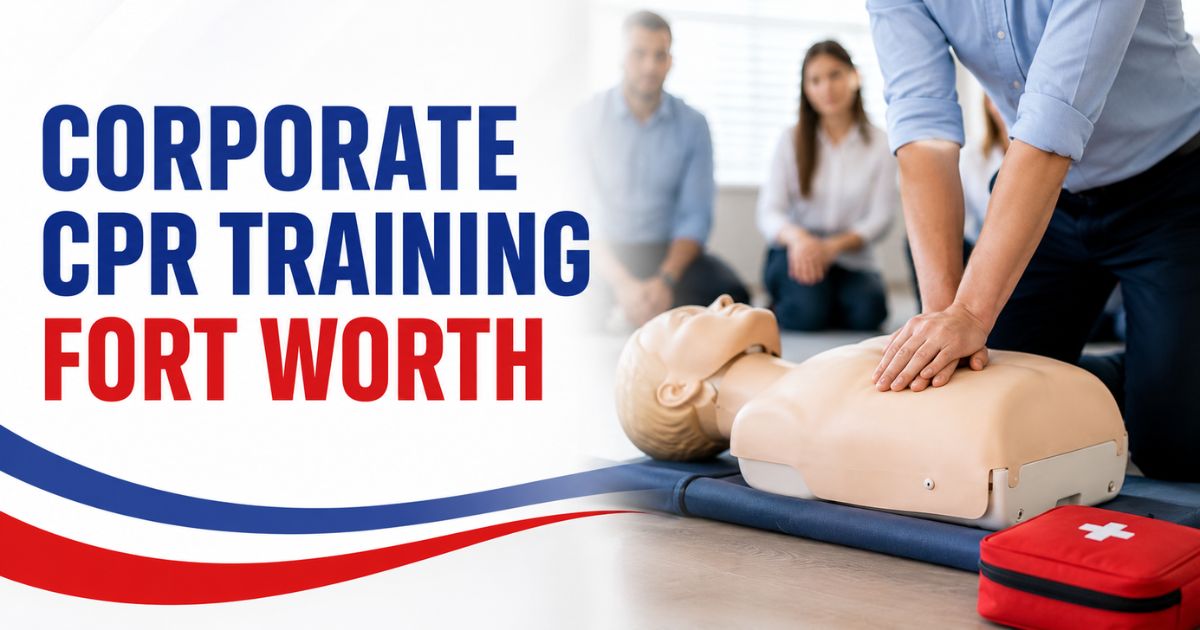
Quick Overview: Choosing the right CPR training company is an important decision for Fort Worth businesses. This blog explains key questions to ask before booking workplace CPR training, from instructor experience and hands-on practice to certification details and onsite options. It also highlights how Texas OnSite CPR helps organizations train employees with convenient, practical, and effective CPR education.
Every workplace has safety plans. Fire exits are marked. Emergency contacts are listed. But one important question often gets overlooked: Do employees know what to do when someone’s life is at risk?
A few trained team members can help create a faster response during a medical emergency. Whether it happens in an office, warehouse, school, or retail space, quick action matters.
Many companies in Fort Worth and beyond turn to corporate CPR training providers to prepare their employees with lifesaving skills. However, not every training program offers the same experience. Asking the right questions before booking CPR certification in Fort Worth can help businesses choose a provider that meets their needs.
10 Questions to Ask Before Booking a Corporate CPR Training Class
1. Does the CPR Training Company Offer Workplace-Focused Training?
Not every CPR class is designed the same way. A workplace environment has different needs compared to a general public setting.
A good corporate CPR training program should consider the type of workplace, number of employees, and possible emergency situations. An office may have different risks compared to a construction site, school, restaurant, or healthcare facility.
Ask the training provider:
- Do you offer CPR classes for businesses?
- Can the training be adjusted for our workplace?
- Do instructors understand common workplace emergencies?
The right company should help employees learn practical skills that apply to real situations they may face at work.
2. Are the Instructors Qualified and Experienced?
The quality of training depends greatly on the instructor. Employees need clear explanations, demonstrations, and guidance during practice.
Before booking a provider, ask about instructor qualifications. Training should be provided by instructors who understand current CPR guidelines and know how to teach these skills to different groups.
A strong instructor does more than explain steps. They help participants understand why each action matters. They also create a comfortable learning environment where employees can ask questions and practice without hesitation.
3. Does the Company Provide Hands-On Practice?
CPR is a skill that requires more than reading instructions or watching a video. Employees need the chance to practice chest compressions, rescue breaths, and other emergency response steps.
When comparing corporate CPR training Fort Worth providers, ask if hands-on practice is included.
During a quality training session, employees should have opportunities to:
- Practice CPR techniques using training manikins
- Learn how to respond to choking emergencies
- Understand when to call emergency services
- Practice working as a team during an emergency
Hands-on learning helps employees feel more comfortable using their skills if a real emergency occurs.
4. Can the Training Come to Your Workplace?
For many Fort Worth businesses, scheduling employee training can be challenging. Taking workers away from their regular duties, arranging travel, and managing schedules can take time.
That is why onsite training can be a helpful option. Instead of sending employees to another location, instructors can come directly to the workplace.
Texas OnSite CPR provides CPR training for businesses, organizations, and groups throughout Texas. Our onsite approach allows companies to train employees at a convenient location while learning important emergency response skills.
Before booking, ask:
- Do you offer onsite training?
- Can you train our team during our preferred schedule?
- Do you provide the needed equipment?
5. Is the CPR Certification Recognized?
Businesses should also ask about certification details before choosing a provider. Employees should receive a valid certification after completing the required training.
When looking into CPR certification in Fort Worth, ask the company:
- Who provides the certification?
- How long is the certification valid?
- What skills are included in the course?
Most CPR certifications require renewal because guidelines and recommendations may change over time. Regular training also helps employees keep their skills fresh.
6. Does the Training Match Your Team Size and Needs?
Every business has different training needs. A small office may need a class for a few employees, while a large company may need training for multiple departments.
Ask the provider if they can support your group size. A good training company should be able to organize sessions that work well for both small and large teams.
Group training can also improve workplace safety because employees learn the same response steps together. This can help create better teamwork during an emergency.
7. What Topics Are Covered During the Course?
Before scheduling a class, ask for a clear overview of what will be taught. A complete workplace CPR course often includes more than basic CPR steps.
Topics may include:
- Adult CPR
- Child and infant CPR when needed
- Choking response
- AED awareness and use
- Basic emergency response actions
Knowing the course content helps businesses make sure employees receive training that matches their workplace requirements.
8. Does the Training Fit Your Industry?
Different industries may have different safety concerns. A restaurant may want employees prepared for choking emergencies. A childcare center may need infant and child CPR skills. An office may focus more on adult emergencies and AED response.
Before selecting a training company, explain your industry and workplace setting. This helps the provider recommend the right course for your team.
9. How Flexible Is the Scheduling Process?
Businesses are busy. Finding time for employee training can be difficult, especially when teams have different schedules.
Ask the CPR provider about available class times and scheduling options. Some companies offer flexible sessions that can be planned around business operations.
A provider that understands workplace schedules can make the training process smoother and easier for employees.
10. What Support Is Available After Training?
Training does not end when the class is over. Businesses should ask if the provider offers support after the session.
Questions to consider include:
- Can employees ask questions after training?
- Are renewal reminders available?
- Can additional team members be trained later?
Ongoing support can help businesses maintain a prepared workforce over time.
Making the Right Choice for Your Fort Worth Business
Texas OnSite CPR makes workplace CPR training simple, convenient, and practical. Since 2003, we have helped DFW businesses, healthcare teams, schools, and organizations learn essential emergency response skills.
We bring certified instructors, training equipment, and hands-on instruction directly to your location, allowing your team to train without disrupting daily operations. Our focus is on providing clear guidance, practical learning, and valuable skills employees can use during real emergencies. If you need reliable corporate CPR training Fort Worth or beyond, we are here to support your safety goals.
Contact us today to schedule your onsite training session and help your team stay prepared.
FAQs
Q1:What should companies ask before choosing a CPR training provider?
Companies should ask about instructor qualifications, hands-on practice, certification options, onsite training availability, course content, and flexible scheduling before choosing a CPR training provider.
Q2:What is included in CPR certification in Fort Worth courses?
CPR certification courses in Fort Worth typically cover CPR techniques, choking response, AED use, emergency response procedures, and hands-on practice with training equipment.
Q3:Can CPR training be conducted at our Fort Worth workplace?
Yes. Texas OnSite CPR provides onsite CPR training at your Fort Worth workplace, allowing your team to receive certified, hands-on instruction without the need to travel.
Q4:Who should receive corporate CPR training?
Corporate CPR training is valuable for employees in offices, schools, healthcare facilities, manufacturing sites, restaurants, retail businesses, and other workplaces where medical emergencies may occur.
Q5:How often should employees renew their CPR certification?
Most CPR certifications should be renewed every two years. Regular renewal helps employees stay confident, maintain their emergency response skills, and follow the latest CPR guidelines.


BLS Provider CPR Classes for Individuals at our 3 Locations

George Brown
All of our staff are now trained in CPR. We now have the highest safety standards in our industry in Texas.
~ G-tech Industrial
Texas OnSite CPR
Text or Call: 817-992-0585
Email: info@texasonsitecpr.com
Contact Us Texas OnSite CPR © 2026.Nancy Stetson
To have our training onSite made it so much easier to get all of our employees trained in CPR.
~ Buffalo Ranch