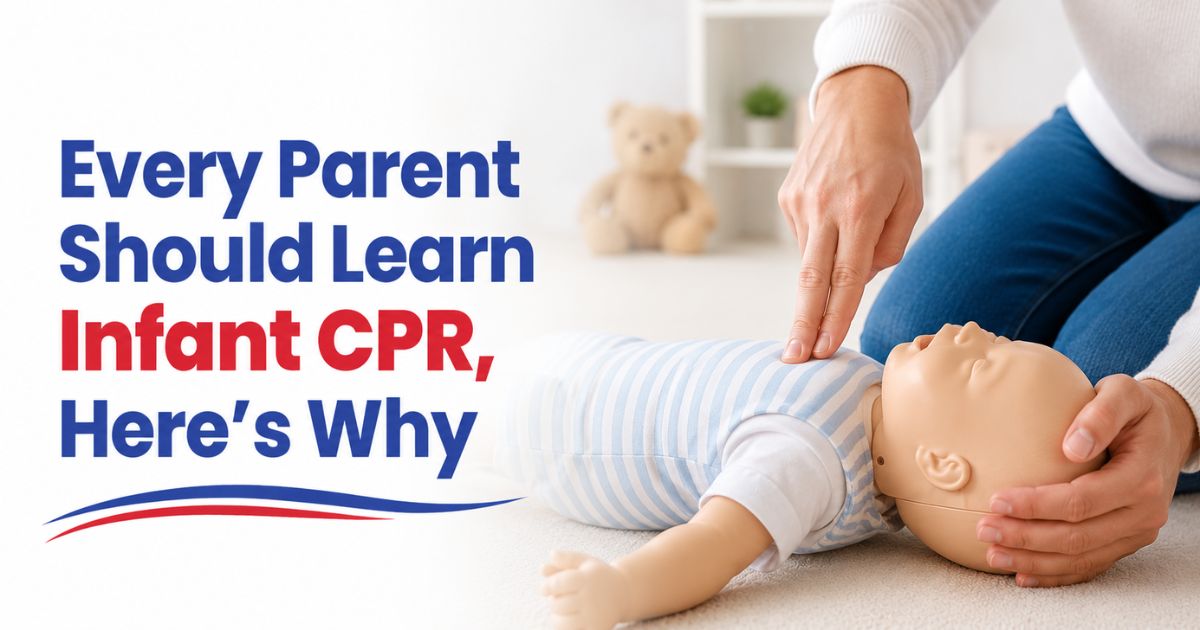
Quick Overview: Infant emergencies can happen without warning, and knowing what to do can make a difference. This blog explains why parents in Texas should learn infant CPR and first aid skills. It covers the importance of proper training, common situations where CPR may help, and how Texas OnSite CPR helps families and caregivers gain confidence through hands-on pediatric emergency training.
A baby’s cry is something every parent knows well. But what happens when that cry suddenly stops? When an infant struggles to breathe, chokes during feeding, or becomes unresponsive, those moments can feel scary and confusing. The right knowledge can help parents stay calm and take action when every second matters.
Many parents in Texas focus on preparing the nursery, buying baby supplies, and scheduling doctor visits. However, learning emergency response skills is just as important. Taking pediatric first aid and CPR certification Texas courses can help parents, grandparents, and caregivers understand what to do during a serious situation involving an infant.
Why Infant CPR Knowledge Matters for Texas Families
Infants are more vulnerable than older children because their bodies are still developing. Their airways are smaller, and they can experience breathing problems quickly. Common emergencies among babies may include choking, drowning accidents, sudden breathing difficulties, allergic reactions, or injuries from falls.
According to the American Heart Association, CPR can help maintain blood flow and oxygen delivery when someone’s heart stops beating effectively. For infants, proper CPR techniques are different from adult CPR. The steps involve specific hand placement, pressure depth, and rescue breathing methods designed for a baby’s small body.
Parents in Texas may never expect to use CPR. Still, emergencies often happen without warning. A few minutes of preparation can make a major difference during a frightening situation.
The First Few Minutes After an Infant Emergency Are Critical
Imagine a typical evening at home. A parent is feeding their baby when the infant suddenly starts choking. The baby cannot cry or breathe properly. In that moment, panic can take over.
Knowing the correct steps can help a parent respond instead of freezing.
Infant CPR training teaches important skills such as:
- How to recognize when a baby needs emergency help
- How to respond to choking
- How to perform infant CPR correctly
- When to call emergency services
- How to provide care until medical help arrives
These skills are useful not only for parents but also for babysitters, daycare workers, family members, and anyone who spends time with infants.
Why Parents Should Take Pediatric First Aid and CPR Classes in Texas
Many new parents believe CPR training is only needed for healthcare workers. That is not true. Anyone caring for a baby can benefit from learning these lifesaving techniques.
Pediatric first aid and CPR classes programs are designed to teach emergency care skills for infants and children. These classes usually cover situations that parents may face at home, including choking, cuts, burns, falls, fever-related concerns, and breathing emergencies.
For families across Texas, having this training can provide confidence. Parents learn how to recognize problems early and respond with clear steps instead of guessing what to do.
A trained caregiver may feel more prepared during an emergency because they understand the basics of immediate care while waiting for professional help.
Infant CPR Is Different From Adult CPR
One common mistake is assuming CPR works the same for everyone. Infants require different techniques because their bodies are smaller and more delicate.
During infant CPR training, parents learn:
- The correct way to check for responsiveness
- How to position an infant safely
- How to provide chest compressions
- How to give rescue breaths
- How to respond to choking incidents
Using the wrong technique can reduce the effectiveness of CPR. That is why hands-on practice is important. Reading instructions online may provide basic knowledge, but practicing with proper equipment helps parents build confidence.
Texas Parents Face Everyday Situations Where CPR Skills Help
Emergencies can happen anywhere. A baby may choke during a meal at home, have trouble breathing during a family gathering, or experience an accident while playing. From backyard pools to family trips and community events, there are many situations where quick action may be needed.
Infant CPR training helps parents prepare for real-life moments. It does not mean expecting something bad to happen. It means being ready if a child needs immediate support.
How Professional CPR Training Helps Parents Feel Prepared
A quality CPR course provides more than instructions. It gives parents the chance to ask questions, practice techniques, and learn from trained instructors.
Hands-on classes allow participants to practice skills like chest compressions and choking response with infant training manikins. This type of learning can make the process easier to remember during stressful situations.
Texas OnSite CPR provides CPR training options for families, businesses, schools, and organizations throughout Texas. Our instructors bring training directly to locations, making it easier for groups and caregivers to learn important emergency response skills.
What Parents Can Expect From Pediatric CPR Training
Parents often wonder if CPR classes will be difficult or overwhelming. In reality, good training programs are designed for everyday people, not only medical professionals.
A typical pediatric CPR course may include:
- Basic first aid response
- Infant and child CPR techniques
- Choking prevention and response
- Emergency action steps
- Practice sessions with training equipment
The goal is not to make parents experts in emergency medicine. The goal is to help them understand what steps to take until emergency responders arrive.
CPR Training Benefits More Than Just Parents
While parents are the first people many infants depend on, other caregivers also play an important role. Grandparents, babysitters, daycare providers, and family friends may spend time alone with a baby. If an emergency happens while they are caring for a child, their response can make a difference.
Encouraging close family members and caregivers to complete pediatric first aid and CPR certification training creates a safer environment for infants.
When Should Parents Take Infant CPR Training?
Many parents choose to take CPR classes before their baby arrives. Others complete training after birth when they realize how many new responsibilities come with caring for an infant.
There is no single perfect time. The important thing is learning these skills before an emergency occurs. Parents should also refresh their knowledge regularly. CPR guidelines and techniques can change, and regular practice helps keep skills fresh.
Be Ready When Your Baby Needs You Most!
A few hours of training can prepare you for moments you never expect. Texas OnSite CPR provides pediatric first aid and CPR certification courses that help parents, grandparents, and caregivers learn essential infant safety skills. Through interactive classes, you can practice CPR techniques, choking response, and first aid basics with guidance from trained instructors.
Give your family an added layer of safety and confidence. Book a CPR training session with Texas OnSite CPR today and learn the skills that can help when every second counts.
FAQs
Q1:At what age should parents learn infant CPR?
Parents can learn infant CPR before their baby is born or at any time afterward. Early training helps caregivers respond confidently during unexpected emergencies.
Q2:What is included in pediatric first aid and CPR certification Texas training?
The training includes infant and child CPR, choking response, basic first aid, and emergency response techniques for parents and caregivers.
Q3:Who should take pediatric first aid and CPR classes Texas?
Parents, grandparents, babysitters, childcare providers, teachers, and anyone responsible for children’s safety can benefit from these CPR and first aid classes.
Q4:Where can Texas parents get pediatric CPR training?
Texas OnSite CPR offers hands-on pediatric CPR training for parents, families, and caregivers at convenient training locations and onsite sessions.
Q5:How long does pediatric first aid and CPR certification Texas training take?
Course length varies by program, but most sessions are completed within a few hours and include instruction, demonstrations, and hands-on practice.


BLS Provider CPR Classes for Individuals at our 3 Locations

George Brown
All of our staff are now trained in CPR. We now have the highest safety standards in our industry in Texas.
~ G-tech Industrial
Texas OnSite CPR
Text or Call: 817-992-0585
Email: info@texasonsitecpr.com
Contact Us Texas OnSite CPR © 2026.Nancy Stetson
To have our training onSite made it so much easier to get all of our employees trained in CPR.
~ Buffalo Ranch