Quick Overview: This blog explains CPR and AED certification requirements for healthcare employees in Texas. It covers why training is essential, who needs certification, renewal rules, and workplace safety benefits. It also explains how CPR training in Texas helps individuals and healthcare teams stay prepared for emergencies with practical, hands-on learning and compliance with healthcare standards.
Healthcare is not only about treatment. It is also about being ready for sudden emergencies that can happen anytime during patient care.
A cardiac arrest can happen in seconds. There is very little time to react or think. In these moments, CPR and AED skills help healthcare staff act quickly and correctly without confusion.
This is why CPR and AED certification is a basic requirement in most healthcare workplaces. It is part of patient safety and job readiness. Many healthcare facilities rely on CPR training Texas programs to keep staff trained, confident, and ready for real emergencies.
Why CPR and AED Skills Matter in Healthcare
In healthcare settings, emergencies can happen without warning. A patient may suddenly stop breathing, lose pulse, or go into cardiac arrest.
In these moments, every second matters.
CPR helps keep blood and oxygen moving when the heart stops. AED devices help restart a normal heart rhythm when needed. Together, they increase survival chances until advanced care arrives.
Healthcare workers use these skills to:
- Respond quickly during emergencies
- Keep blood flow active during cardiac arrest
- Support breathing until help arrives
- Stabilize patients before doctors take over
CPR and AED skills are the first response in saving lives.
CPR and AED Certification Rules in Healthcare Settings
Most healthcare employers in Texas require CPR and AED certification before staff can begin work. In many cases, it is also needed for license renewal.
The requirement depends on the role. Common jobs include:
- Nurses and nurse assistants
- Doctors and medical staff
- Emergency room workers
- Dental staff
- Home healthcare workers
- Nursing home caregivers
- Medical technicians
Certification must come from approved training bodies like the American Heart Association or Red Cross-based programs.
Most healthcare facilities require:
- Adult, child, and infant CPR training
- AED training and usage
- Basic first aid knowledge
- Hands-on skill practice
- Renewal every two years
Without valid certification, staff may not be allowed to work in patient care areas.
CPR First Aid Training for Healthcare Teams
Healthcare facilities often work with structured training providers to manage certification. A CPR first aid training company Texas helps hospitals, clinics, and care centers train staff in a simple and organized way.
These programs focus on real healthcare needs. The goal is not only theory but also real practice.
Training usually includes:
- Basic Life Support (BLS) training
- CPR for adults, children, and infants
- AED use and safety steps
- Choking emergency response
- Basic first aid skills
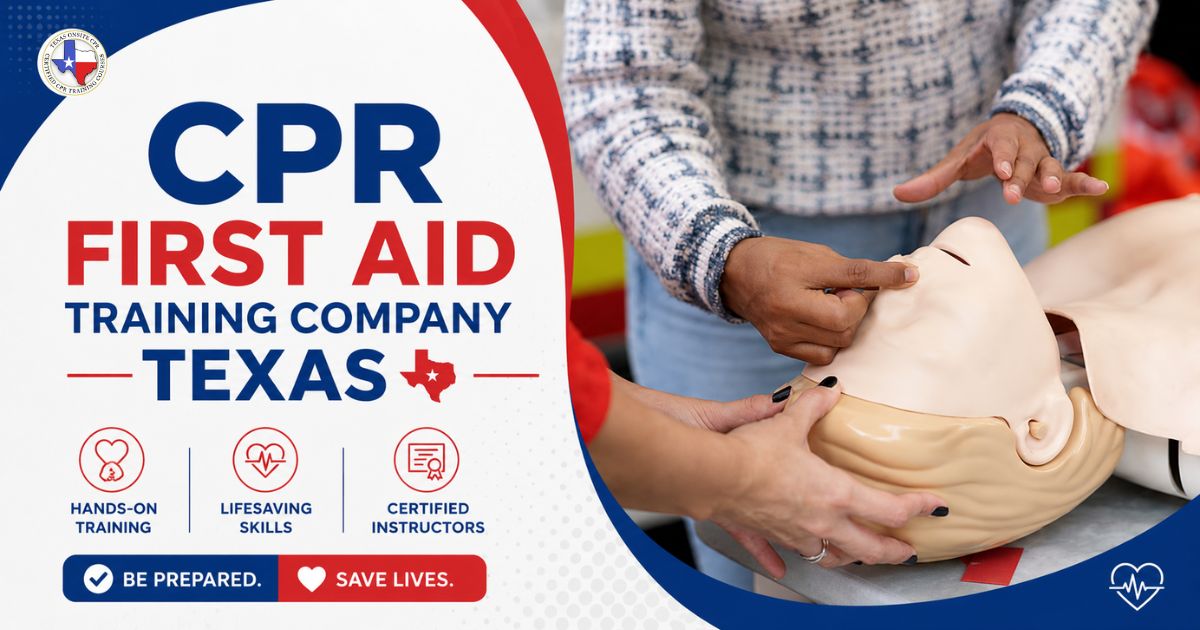
Training is hands-on. Staff practice chest compressions, rescue breathing, and AED steps using training tools. This builds muscle memory. In real emergencies, staff must act fast without thinking step by step.
Group training also helps teams learn together. This improves coordination during emergencies.
CPR Training Texas Standards for Healthcare Professionals
CPR training Texas programs follow national safety guidelines and focus on real hospital situations.
Training usually includes:
- High-quality chest compressions
- Airway and breathing support
- AED use and placement
- Emergency response steps
- Team-based CPR practice
In hospitals, CPR is not done alone. It is a team effort.
One person starts compressions. Another uses the AED. Another calls for help. Because of this, training also includes communication practice. Some roles may also require advanced training like BLS or ACLS.
AED Certification in Healthcare Settings
AEDs are found in almost every healthcare facility today. Even small clinics and nursing homes keep them ready.
But having the device is not enough. Staff must know how to use it correctly.
AED training teaches:
- How to turn on the device
- How to place pads correctly
- How to follow voice instructions
- How to stay safe before shock delivery
- How to continue CPR after use
Timing is very important. Even small delays can affect outcomes. That is why AED training is repeated often.
Certification Renewal and Ongoing Training
CPR and AED certification is not permanent. Most certifications are valid for about two years.
Healthcare employers expect staff to:
- Renew certification on time
- Attend refresher training
- Stay updated with new guidelines
- Complete skill checks when needed
Many hospitals also conduct mock emergency drills. These help staff stay prepared. Skills can fade if not used often. Even experienced staff need refreshers.
Why Hands-On Training Is Important
CPR training in healthcare is not just reading or watching videos. It is practical.
Hands-on training helps staff:
- React faster in emergencies
- Build correct compression rhythm
- Reduce hesitation
- Work better as a team
- Stay calm under pressure
Real emergencies do not give time to think. That is why practice is repeated using mannequins and simulations.
CPR Certification and Patient Safety
CPR-certified healthcare workers play a direct role in saving lives.
In emergencies, trained staff can:
- Start CPR immediately
- Use AED without delay
- Stabilize patients before doctors arrive
- Improve survival chances
Even a short delay can affect recovery. That is why certification is not optional in healthcare. It is a core safety requirement.
Texas OnSite CPR and Healthcare Training Support
Many healthcare organizations across the state work with Texas OnSite CPR for certification and training needs. Here, the focus is on simple, practical, and workplace-ready skills.
Training is designed for different healthcare settings, from small clinics to large hospitals. This helps staff learn in a way that matches their daily work. The goal is simple. Help healthcare teams stay compliant, confident, and ready for real emergencies.
Common Challenges in CPR Compliance
Healthcare facilities often face challenges like:
- Frequent staff changes
- Busy work schedules
- Expiring certifications
- Different skill levels among staff
Structured training programs help solve these issues with flexible scheduling and group sessions.
Ready to Get Certified? Start Your Training Here
CPR and AED certification is a key requirement for healthcare employees in Texas. It ensures staff can respond quickly and confidently during emergencies.
If you are an individual or a healthcare team, you can book training with Texas OnSite CPR. We offer flexible, hands-on CPR training designed for workplace needs and certification requirements.
Visit Texas OnSite CPR to learn more and book your training session.
FAQs
Q1:Is CPR certification mandatory for healthcare workers in Texas?
Yes, most healthcare positions in Texas require CPR certification. It helps meet workplace safety requirements and must be renewed regularly to remain valid.
Q2:What does CPR training Texas include?
CPR training in Texas typically covers adult, child, and infant CPR, AED operation, choking response, and other essential emergency care techniques.
Q3:Why is AED training important in healthcare?
AED training is important because it teaches healthcare professionals how to respond quickly during cardiac arrest and use the device correctly to improve survival outcomes.
Q4:Can healthcare teams get group CPR training?
Yes, group CPR training is available for healthcare teams. It helps staff learn together, improve coordination, and strengthen emergency response readiness.
Q5:Where can I book CPR training sessions with Texas OnSite CPR?
You can schedule CPR training through Texas OnSite CPR. We provide hands-on training for individuals and healthcare teams with flexible onsite and in-person scheduling options.


BLS Provider CPR Classes for Individuals at our 3 Locations

George Brown
All of our staff are now trained in CPR. We now have the highest safety standards in our industry in Texas.
~ G-tech Industrial
Texas OnSite CPR
Text or Call: 817-992-0585
Email: info@texasonsitecpr.com
Contact Us Texas OnSite CPR © 2026.Nancy Stetson
To have our training onSite made it so much easier to get all of our employees trained in CPR.
~ Buffalo Ranch