Quick Overview: A school CPR class is more than sitting through a presentation. Students and staff learn how to recognize an emergency, perform CPR, and use an AED through hands-on practice. This blog explains what to expect from group CPR training at Dallas schools, how onsite classes work, what students should bring, and how training can help participants feel more prepared to respond.
You do not need to work in a hospital to need CPR skills. A teacher, coach, school employee, or even a student could be nearby when someone experiences cardiac arrest. In that moment, waiting for someone else to take charge may cost valuable time.
This is why schools across Dallas include CPR training in their safety planning. If you are considering CPR certification in Dallas, you may be surprised by how practical the class is. Students do not simply sit and take notes. They practice CPR, learn about AEDs, and work through situations that could happen at school.
Why CPR Training Matters in Dallas Schools
Schools are busy places. Students are in classrooms, gyms, sports fields, cafeterias, hallways, and other areas throughout the day. Teachers, coaches, office staff, and other employees are also moving around campus.
An emergency can happen in any of these places.
Texas has also made CPR education part of school safety. Students in Grades 7 through 12 must receive CPR instruction at least once before graduation. Texas rules also include training related to automated external defibrillators, or AEDs. Schools are required to have at least one AED available on campus.
So, CPR training is not simply another class to add to the school calendar. It gives students and staff a chance to practice what they may need to do if someone has a cardiac emergency.
What Happens When the Group CPR Class Starts?
The class usually begins with some basic information. The instructor explains what cardiac arrest is and how to recognize when someone may need immediate help. Students learn why calling for emergency help quickly matters and how CPR fits into the response.
This part is important because many people have only seen CPR in movies or on television. Real CPR is much different. The instructor walks the group through the proper steps and explains what a person should do in an emergency.
For a school, the discussion can also be connected to the campus itself. Students and staff may think about where the AED is located, who they would contact for help, and how emergency responders would access the building.
That makes the training feel more real and easier to remember.
CPR Certification in Dallas Is Hands-On
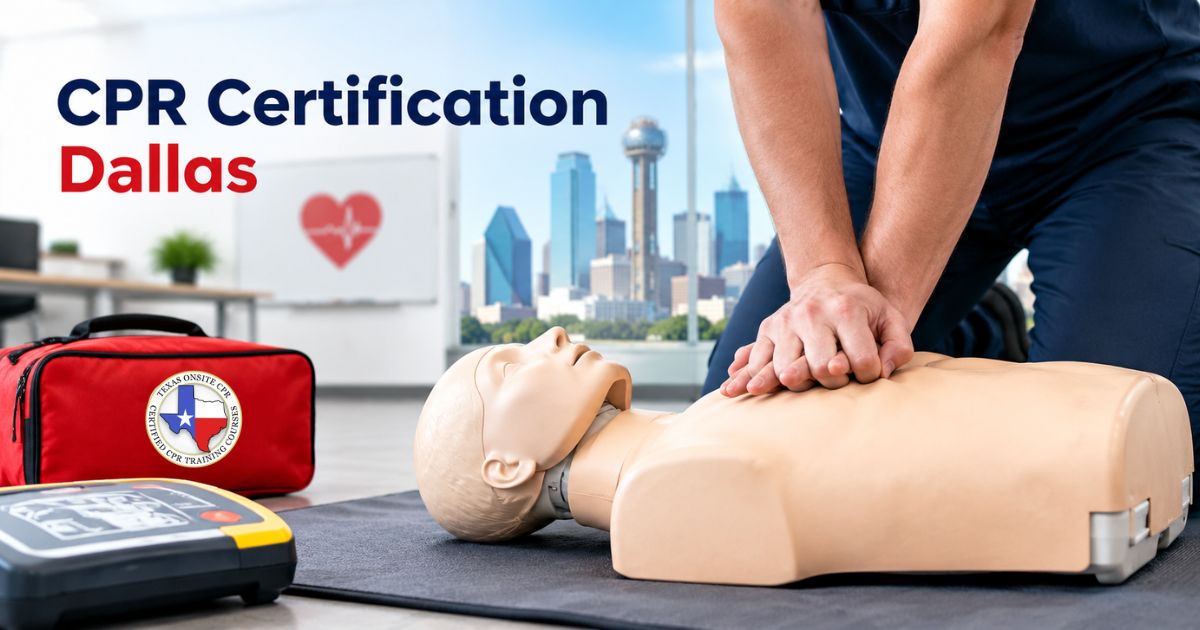
This is usually the part students remember most. Instead of spending the entire class listening to an instructor, participants get to practice CPR themselves. Training manikins are used so students can safely work on their technique.
The instructor may first demonstrate how to position the hands and perform chest compressions. Then students get a chance to try it. It can feel strange at first. That is completely normal.
Some students may be nervous about doing something wrong. Others may wonder if they are pressing hard enough or moving too quickly. The instructor can watch their technique and offer corrections during practice.
That is the whole point of hands-on training. Students get to practice in a safe classroom instead of trying to figure things out for the first time during a real emergency.
What Do Students Practice?
The exact skills depend on the CPR course the school chooses.
In a basic CPR course, students may practice recognizing an emergency, getting help, performing chest compressions, and using an AED. Some courses also teach rescue breathing. The instructor explains each step before students practice it.
The goal is not to turn students into healthcare professionals. It is to help them know how to respond while professional medical help is on the way.
Students also learn that they do not need to know everything before helping. Taking action, calling for emergency assistance, and following their training are important parts of responding to a cardiac emergency.
Learning to Use an AED
An AED may look intimidating when you first see one.
During training, students learn that the device is designed to guide the rescuer through the process. An AED checks the person’s heart rhythm and determines whether a shock is appropriate.
The device gives voice or visual instructions. The person using it follows those instructions. Students get a chance to become familiar with the equipment during class. This can make the AED seem much less confusing if they ever see one during an actual emergency.
For Dallas-area schools, this is especially useful because students and staff may already have an AED somewhere on campus. Knowing what it looks like and understanding its basic purpose can help students feel more prepared.
It Is Okay to Make Mistakes
Nobody walks into a CPR class knowing every step. Students may forget something. They may put their hands in the wrong place. They may need a reminder about what comes next. That is normal.
A training class is the right place to make those mistakes. The instructor can stop, explain the step again, and let the student try it one more time. With practice, the process starts to feel more natural.
This is also why group training can work well in a school setting. Students can learn together, ask questions, and see how others approach the same skill.
The classroom does not have to feel serious every second. There may be some nervous laughter at the beginning. Once everyone starts practicing, students often become more comfortable.
What About Emergency Scenarios?
Some group CPR classes use simple emergency situations to help students think about what they would do outside the classroom.
For example, the instructor might describe a situation where someone collapses in the school gym. What should happen first?
Someone needs to recognize that the person needs help. Someone should activate emergency medical services. Someone may need to bring the AED. Another person may begin CPR.
This helps students understand that responding to an emergency is often a team effort. It also gets them thinking beyond the physical CPR skill. They learn that communication and quick action are important, too.
How Long Does a School CPR Class Take?
The time can vary based on the course and the people taking it. If you are planning CPR certification Dallas training, the right course depends on who is being trained and what your school needs.
Students may need different training from teachers, coaches, or other school employees. School administrators should confirm the course requirements before scheduling a class.
What Should Students Bring?
There usually is not much to prepare. Students should wear comfortable clothing since CPR practice may involve kneeling beside a training manikin. They should also be ready to participate rather than simply watch. For onsite group classes, the training provider may bring the necessary equipment.
Texas OnSite CPR provides onsite group training in the DFW area and lists training manikins, AED trainers, pocket masks, presentation equipment, and student materials among the equipment and supplies provided for its group courses.
That can make the process easier for schools because the training can take place on campus without asking every student to travel somewhere else.
What Happens After the Class?
Once the practice is finished, students may complete the required course steps or assessment, depending on the program. Those who successfully complete an approved certification course can receive the appropriate certification based on that course.
But the most important result is not the card or certificate. It is knowing what to do.
A student may never need to perform CPR. Hopefully, they never will. Still, having practiced the steps means they have something to rely on if an emergency happens.
For teachers and school staff, the same idea applies. CPR training gives them a chance to build practical skills before they are faced with a real emergency.
CPR Training That Comes to Your Campus
What if your students and staff could learn CPR without leaving campus? CPR certification Dallas training can be brought directly to your school with Texas OnSite CPR. We provide group CPR, First Aid, and AED training across Dallas and the DFW area, so participants can learn in a familiar school environment without traveling to a training center.
Our classes include hands-on practice, demonstrations, and guidance from instructors. This gives students and staff a chance to build practical skills in a comfortable setting. It also makes group training easier for school administrators to coordinate.
Looking to schedule school CPR training? Contact Texas OnSite CPR today to get started.
Read Also: Texas Education Code & CPR Certification: What Every Individual Should Know
FAQs
Q1: Do students need previous CPR experience before taking the class?
No. Students do not need previous CPR experience. The instructor teaches the skills step by step and provides hands-on practice during training.
Q2: How long does a school CPR class usually take?
Class length depends on the course selected. Some CPR-AED courses take about two hours, while combined CPR and First Aid courses take longer.
Q3: Can CPR training be held at our Dallas school?
Yes. Onsite providers can bring CPR, First Aid, AED training, instructors, and necessary equipment directly to schools across Dallas and surrounding DFW communities.
Q4: What will students practice during CPR training?
Students may practice chest compressions, emergency response steps, AED use, and other skills included in their selected CPR training course.
Q5: How can schools arrange CPR certification Dallas training?
Schools can contact Texas OnSite CPR, an experienced CPR training provider, to discuss group size, course options, scheduling, and onsite training requirements for their campus.


BLS Provider CPR Classes for Individuals at our 3 Locations

George Brown
All of our staff are now trained in CPR. We now have the highest safety standards in our industry in Texas.
~ G-tech Industrial
Texas OnSite CPR
Text or Call: 817-992-0585
Email: info@texasonsitecpr.com
Contact Us Texas OnSite CPR © 2026.Nancy Stetson
To have our training onSite made it so much easier to get all of our employees trained in CPR.
~ Buffalo Ranch