Texas Onsite CPR Blog | Return to Blog Index
What Is Corporate CPR Training in Dallas and Why Do Businesses Need It?
March 20, 2026
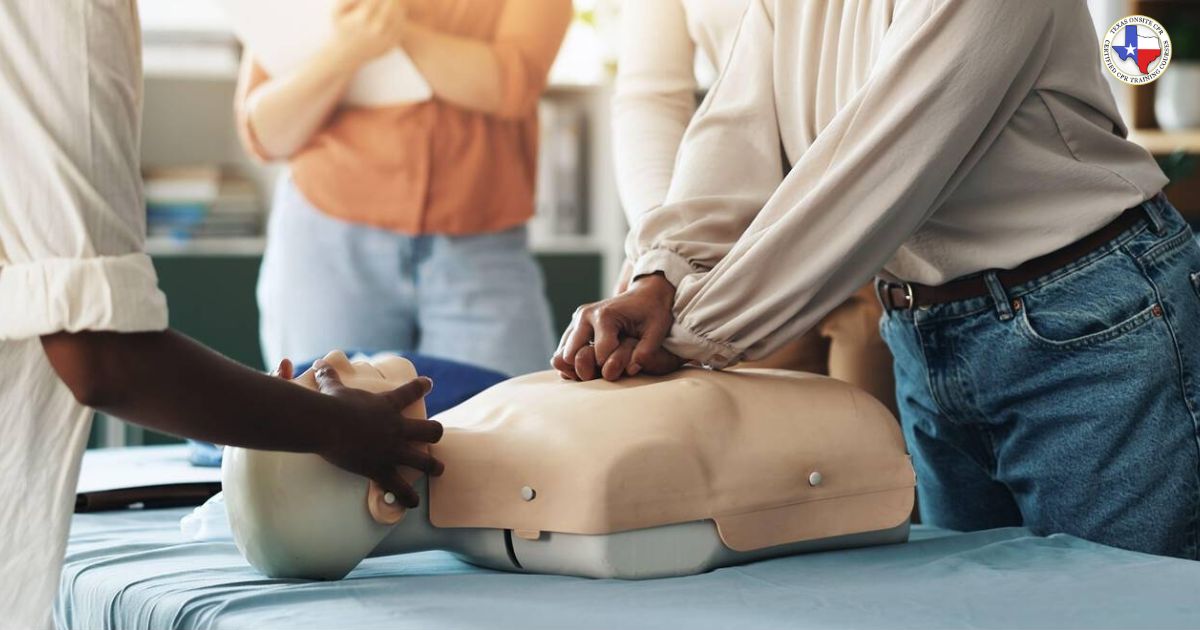
Offices, gyms, schools, and stores face emergencies every day. Cardiac arrest doesn’t wait for anyone. That’s why corporate CPR training in Dallas is more than a nice-to-have. It’s a lifesaver, literally.
Texas OnSite CPR brings this training right to your workplace. Staff practice hands-on skills, learn to stay calm under pressure, and leave confident. No boring lectures. No fluff. Just skills that save lives.
What Corporate CPR Training Covers?
Corporate CPR isn’t rocket science, but it’s not guesswork either. Employees learn step-by-step skills in real-life scenarios.
Here’s what they get:
- Checking if someone is responsive
- Calling 911 fast and clearly
- Performing chest compressions and rescue breathing
- Using an AED safely
The training is hands-on. Everyone gets a chance to practice. Mistakes happen, but trainers guide staff until they feel ready. By the end, they can act fast and smoothly in any emergency.
The program also teaches teamwork. Emergencies are chaotic. If everyone knows their part, help flows quickly and efficiently.
Why Businesses Can’t Skip CPR Training?
Accidents hit without warning. Waiting for paramedics isn’t always enough. Staff trained in CPR can make all the difference.
Here’s why businesses need it:
- Protects employees and visitors
- Reduces workplace fatalities
- Builds staff confidence
- Shows clients and customers that the company cares
Investing in CPR training is a no-brainer. It’s smart, it’s responsible, and it might even save a coworker’s life.
Spotting Emergencies Quickly
Training starts with awareness. Employees learn how to spot danger fast. For example:
- Someone falls suddenly
- Choking incidents during lunch
- A visitor faints in the lobby
Staff learn to act, not panic. They check the scene, ensure their own safety, and take quick action. These first steps are critical.
Transitioning from panic to action happens naturally in the hands-on training. Employees leave ready to step up instead of freezing.
CPR Made Simple
CPR isn’t just pushing on a chest randomly. It has rhythm and technique.
Key points in training:
- Proper hand placement
- Correct compression depth
- Fast, steady rhythm
- Allowing full chest recoil
Staff practice on manikins until moves become second nature. The program also covers differences in adults, children, and infants. Each requires a slightly different approach.
Trainers use simple cues to help staff remember. Push hard, push fast, keep calm. It’s that straightforward.
Rescue Breathing and AED Use
Rescue breaths help oxygen reach the lungs when someone isn’t breathing. Training shows how to:
- Open the airway using the head tilt and chin lift
- Give breaths without overdoing it
- Keep rhythm with compressions
AEDs can restart a stopped heart. Staff learn:
- How to turn the device on
- Pad placement
- Following voice prompts
- Clearing the person during shock
Hands-on drills remove hesitation. When seconds count, hesitation can cost lives. Practice builds muscle memory and confidence.
Teamwork Makes the Difference
Emergencies are messy. Teamwork keeps things smooth. Corporate CPR training covers:
- Assigning roles quickly
- Rotating chest compressions to avoid fatigue
- Coordinating rescue breaths
- Calling 911 and prepping the AED
Transition words, hand signals, and clear commands keep the team on the same page. Staff learn to work like a well-oiled machine.
Real-Life Scenarios
Theory is good. Practice is better. Corporate CPR training includes real-life simulations.
For instance:
- A staffer chokes during lunch
- Someone collapses in the warehouse
- A visitor faints in the lobby
Staff practice spotting danger, calling for help, and performing CPR. Repeating these scenarios reduces panic during real events. They leave feeling confident and ready.
Infection Control and Safety
Helping someone isn’t just chest compressions. Safety matters. Staff learn:
- Using gloves
- Masks for rescue breaths
- Avoiding contact with blood or fluids
- Cleaning up after emergencies
Simple hygiene keeps rescuers safe while helping others. Texas OnSite CPR emphasizes this throughout the program.
Benefits for Dallas Businesses
Investing in CPR training in Dallas isn’t just about compliance. Businesses gain:
- Safer workplaces
- Confident employees
- Improved team morale
- Positive reputation with clients and visitors
It also reduces liability. Companies show they care about staff and public safety. Employees feel valued, which boosts engagement.
Training is flexible. Texas OnSite CPR comes to your location. Sessions work for small offices, large teams, or rotating shifts. No one misses out, and learning happens in a real environment.
Certification and Follow-Up
Staff leave with certification recognized in workplaces and healthcare settings. Certificates typically last two years. Renewal classes keep skills sharp.
Hands-on practice, quizzes, and AED drills ensure employees retain what they learned. The goal is confidence, not just passing a test.
Take Action and Save Lives
Emergencies strike without warning. Corporate CPR training equips staff to stay calm, act fast, and save lives.
Texas OnSite CPR brings training to your office, warehouse, or school. Teams practice real-life scenarios, learn AED use, and leave confident.
Don’t wait for disaster to hit. Schedule your corporate CPR training today and turn your workplace into a lifesaving-ready zone.
FAQs
Q1:Who should attend corporate CPR training?
All employees can benefit. Office staff, warehouse workers, coaches, or customer-facing teams all gain lifesaving skills. Businesses often start with high-risk areas, then expand to full teams. Everyone leaves prepared.
Q2:How long does the training take?
Sessions usually run 2–4 hours. Time includes CPR practice, AED drills, and emergency scenarios. Staff leave ready to act, not just memorizing steps.
Q3:Does training provide certification?
Yes. Employees get a certificate valid for two years. It proves workplace compliance and emergency readiness. Renewal sessions refresh skills to keep staff confident.
Q4:Can CPR training save lives outside work?
Absolutely. Cardiac arrest and emergencies happen anywhere—at home, the gym, or on the street. Staff trained at work can respond quickly and help friends, family, or strangers in need.
Q5:Is hands-on practice really necessary?
Yes. Muscle memory beats memorization. Compressions, rescue breaths, and AED use need practice. Hands-on drills prepare staff to act under real pressure, not just theory.
Texas Onsite CPR Blog - Return to Blog Index

Thomas McMillan
Thomas McMillan is the founder of Texas Onsite CPR, dedicated to providing life-saving CPR and first aid training across Texas. With years of experience in emergency response and certification instruction, Thomas is passionate about equipping individuals and organizations with the skills needed to respond confidently in critical situations. His commitment to quality training ensures that every student leaves prepared to make a difference when it matters most.



 FORT WORTH