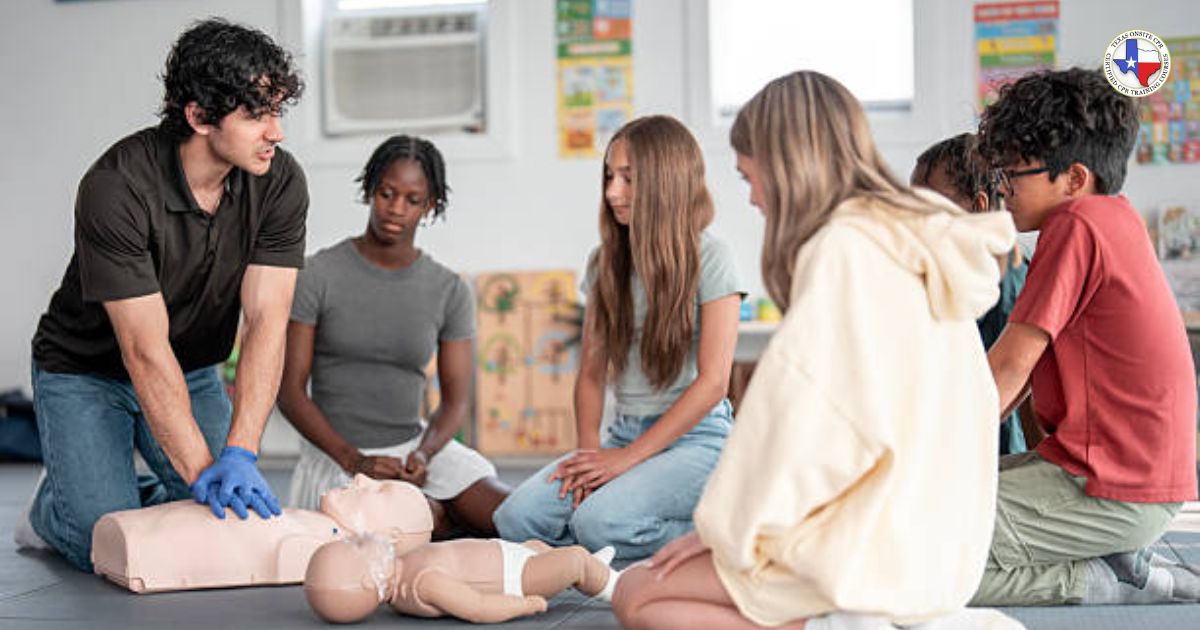
CPR training saves lives. Still, not every class fits every age group. Texas follows national guidelines, yet course goals shift based on who needs help. Parents, teachers, sitters, and coaches often need child-focused skills. Healthcare staff and safety teams lean toward adult rescue steps. Picking the right path builds calm and confidence during stress.
Pediatric first aid and CPR certification in Texas gives tools built for kids, while adult courses focus on grown bodies and risks. Knowing how these paths differ helps learners choose wisely and act fast when seconds count.
Why Age Matters in CPR Training?
Bodies change from birth to adulthood. Airway size, chest shape, and heart rate vary by age. Training reflects those facts. Pediatric courses teach gentle force, smaller breaths, and kid-safe checks. Adult courses stress deeper compressions and higher force. Texas instructors follow American Heart Association and Red Cross standards, yet the learner outcome differs.
Kids face choking, drowning, and breathing issues more often. Adults face cardiac arrest, stroke, and trauma. Courses mirror real risks. Learners practice scenarios they face on the job or at home. No fluff. Just practical steps.
Who Should Take Pediatric CPR vs Adult CPR?
Pediatric courses fit roles with regular child contact. Adult courses suit workplaces with grown teams or public settings.
Pediatric CPR fits:
- Parents and grandparents
- Daycare and preschool staff
- School teachers and aides
- Youth sports coaches
- Camp counselors
- Babysitters and nannies
Adult CPR fits:
- Office safety leads
- Factory teams
- Construction crews
- Gym staff
- Security guards
- General public responders
Texas law does not force one course for all roles. Employers set rules. State childcare licensing often asks for pediatric training.
Core Skill Differences You Will Learn
Both paths teach lifesaving basics. The hands-on steps change by age group.
- Compression depth and hand size vary by age
- Rescue breaths use a lower volume for infants and kids
- Choking relief uses age-safe thrusts and back blows
- AED pad size and placement differ
- Scene checks focus on age-specific risks
This single skill set choice can raise success rates during rescue. Practice builds muscle memory. Reps matter.
Infant, Child, and Adult Focus Areas
Pediatric courses cover infants and children. Adult courses focus on teens and grown adults. Texas classes often split content by age bands.
Infant CPR
Infants need a soft touch. Two fingers replace two hands. Breath size stays small. Instructors stress head tilt control and gentle checks.
Child CPR
Children need one or two hands based on size. The compression depth sits lower than that of adults. Trainers cover playground injuries and pool risks.
Adult CPR
Adults need strong compressions. Two hands are stacked at the center of the chest. Courses stress speed and depth. AED use plays a big role.
First Aid Differences
First aid sits beside CPR in most Texas classes. Pediatric first aid covers kid-specific issues. Adult first aid leans toward workplace injuries.
Pediatric first aid topics include
- Fever and seizures
- Allergic reactions
- Falls and head bumps
- Cuts and burns
- Poison exposure
Adult first aid topics include:
- Chest pain signs
- Heavy bleeding control
- Fractures and sprains
- Heat stress
- Shock care
Courses keep language simple. Instructors use real examples. Learners ask questions and practice.
AED Training in Texas Courses
Automated External Defibrillators save lives. Texas promotes public AED access. Training differs by age.
Pediatric courses teach child and infant pad use. Learners practice pad placement on small chests. Adult courses focus on speed and scene control. Both teach safety checks and clear calls.
Texas laws protect responders who act in good faith. Training builds trust to step in without fear.
Class Length and Format
Course length depends on the scope. Pediatric programs often run longer due to added age groups. Adult courses move faster.
- Typical formats include:
- In-person classes
- Blended online plus skills check
- On-site group sessions
Hands-on time matters. Texas providers stress practice over slides. Learners leave ready, not confused.
Certification Validity and Renewal
Both certifications last two years in Texas. Renewal keeps skills sharp. Guidelines change over time. Practice fades without use.
Renewal classes run shorter. Skills checks stay strict. Learners refresh compressions, breaths, and AED use. Pediatric renewals revisit infant steps, which people forget first.
Cost Differences Across Texas
Prices vary by provider and city. Pediatric courses may cost more due to a longer time and added content. Group rates help schools and centers.
Costs often include:
- Course materials
- Skills testing
- Digital or printed cards
Some employers cover fees. Others ask the staff to pay. Local fire departments may offer low-cost options.
Read Also: What Should You Know Before Enrolling in CPR Certification Classes in Dallas?
Choosing the Right Course in Texas
Choice depends on daily life and job needs. A parent may need a pediatric focus. A warehouse lead may need adult focus. Some roles need both.
Look for classes with:
- Certified instructors
- Hands-on practice
- Clear renewal terms
- Flexible schedules.
Real-Life Scenarios Shape Training
Good courses use stories. Learners act out pool rescues, choking at lunch, or collapsing at work. Texas trainers know local risks like heat and water. Practice sticks better than theory.
Pediatric courses stress calm voice and crowd control around kids. Adult courses stress team roles and fast action. Both build confidence.
Online vs In-Person Rules
Texas allows blended learning for many roles. Some licenses need full in-person training. Childcare licensing often asks for hands-on pediatric skills.
Online theory saves time. Skills checks ensure proper form. Always confirm employer or state rules before booking.
How Employers View Each Certification?
Employers care about fit. A daycare wants pediatric proof. A hospital wants adult or advanced life support. Some jobs ask for both.
Holding pediatric first aid and CPR certification in Texas shows readiness for child safety. Adding adult CPR widens options. Dual training helps coaches and school staff.
Common Myths to Avoid
People think one course covers all ages. It does not. Others think CPR feels the same across bodies. It does not. Some fear legal risk. Texas Good Samaritan laws protect helpers who act with care.
Training clears doubt. Practice builds trust.
Where to Find Quality Training?
Texas hosts many providers. Hospitals, community colleges, and private trainers offer courses. Look for reviews and clear outlines. Ask about class size. Small groups mean more practice.
Use pediatric first aid and CPR classes in Texas searches to compare dates and formats. Choose convenience without cutting corners.
Train with Texas OnSite CPR
Need flexible, hands-on CPR training delivered at your location? Texas OnSite CPR offers professional instruction built for real-life situations. Our team provides group-friendly scheduling, certified trainers, and practical skills practice for both adult and pediatric needs. Book your session today and give your team the confidence to act when it matters most.
Read Also: Why Should Everyone Be Trained to Give CPR?
Frequently Asked Questions
Q1:Is pediatric CPR certification required for childcare workers in Texas?
Yes. Texas childcare licensing often asks staff to hold pediatric first aid and CPR certification in Texas. This helps ensure safe care for infants and young children in daily settings.
Q2:Can one CPR course cover both children and adults?
Some programs combine age groups, but skills still differ. Learners working with kids benefit more from pediatric first aid and CPR classes in Texas, while workplace teams may need adult-focused training.
Q3:How long does CPR certification stay valid in Texas?
Most CPR certifications remain valid for two years. Renewal helps refresh skills and keeps training aligned with current safety guidelines.
Q4:Are online CPR classes accepted in Texas?
Blended formats work for many roles. Online lessons usually require an in-person skills check. Childcare and school roles often require hands-on training.
Q5:How do I choose the right CPR class for my role?
Start by reviewing job or licensing needs. Parents, teachers, and caregivers should look for pediatric first aid and CPR classes in Texas, while industrial or office teams may focus on adult CPR.


BLS Provider CPR Classes for Individuals at our 3 Locations

George Brown
All of our staff are now trained in CPR. We now have the highest safety standards in our industry in Texas.
~ G-tech Industrial
Texas OnSite CPR
Text or Call: 817-992-0585
Email: info@texasonsitecpr.com
Contact Us Texas OnSite CPR © 2026.Nancy Stetson
To have our training onSite made it so much easier to get all of our employees trained in CPR.
~ Buffalo Ranch